Commercial Roofing · Edgewood, KY

Edgewood Commercial Roofing Contractor

Roof Work for Clinics, Medical Offices, and Busy Professional Buildings

As an Edgewood commercial roofing contractor, we replace and repair membrane roofs over clinics and offices while patients and staff keep using the rooms below.

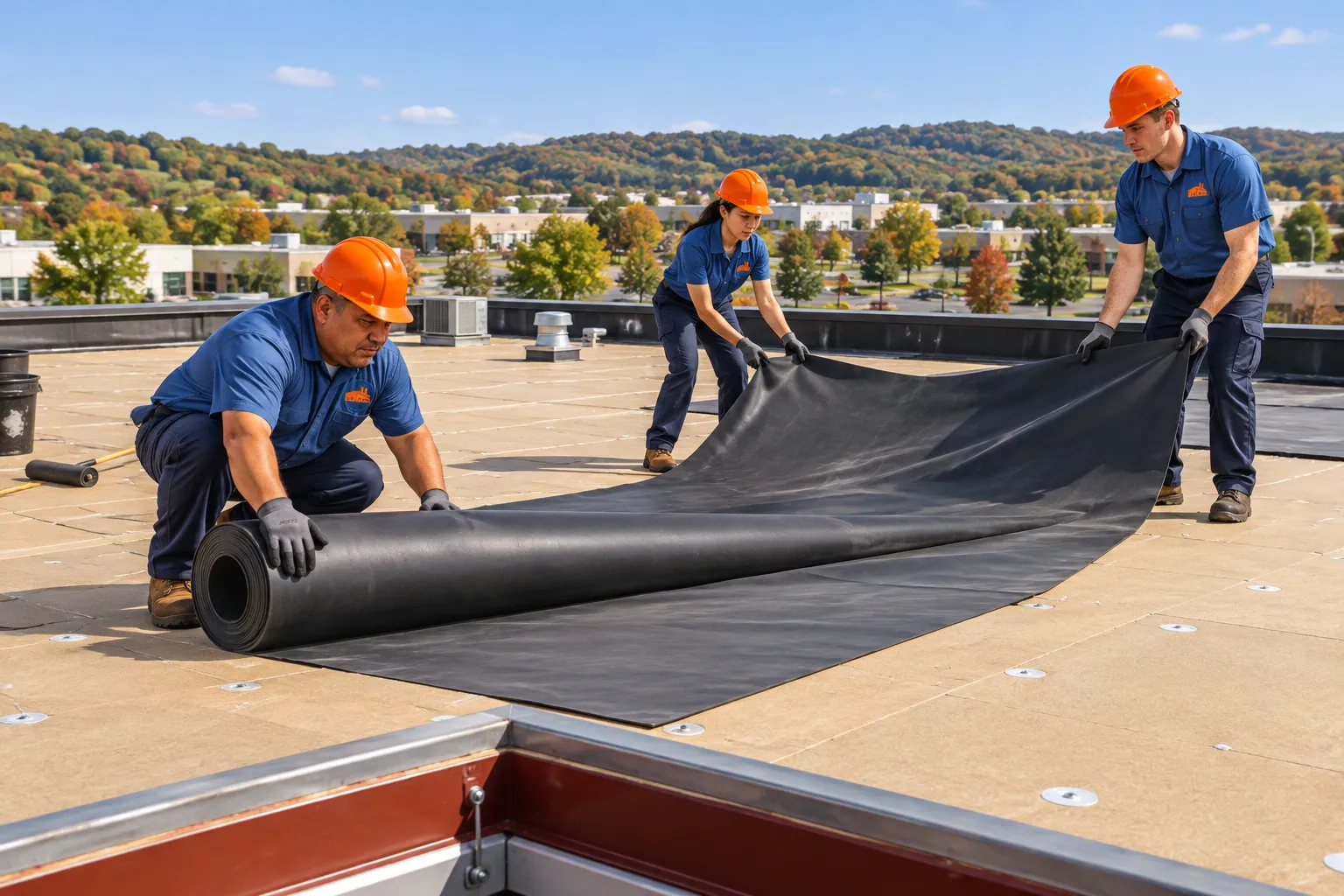
Roofers in logo uniforms rolling a black EPDM membrane seam on a commercial roof

Medical Roofs Near the St. Elizabeth Edgewood Campus

Clinics and medical offices near St. Elizabeth Edgewood carry many rooftop units over occupied exam and treatment rooms. For an Edgewood commercial roofing contractor, the plan starts with the air intakes: where they sit, when they can shut down, and which adhesive goes near them.

Fully adhered TPO or EPDM with low-odor adhesive fits these roofs well, and the work is phased by building wing so the clinic stays open.

  • Air intakes mapped before any adhesive opens
  • HVAC curbs raised to clear the new insulation
  • Walkway pads from the hatch to every unit
  • Quiet hours kept near treatment rooms
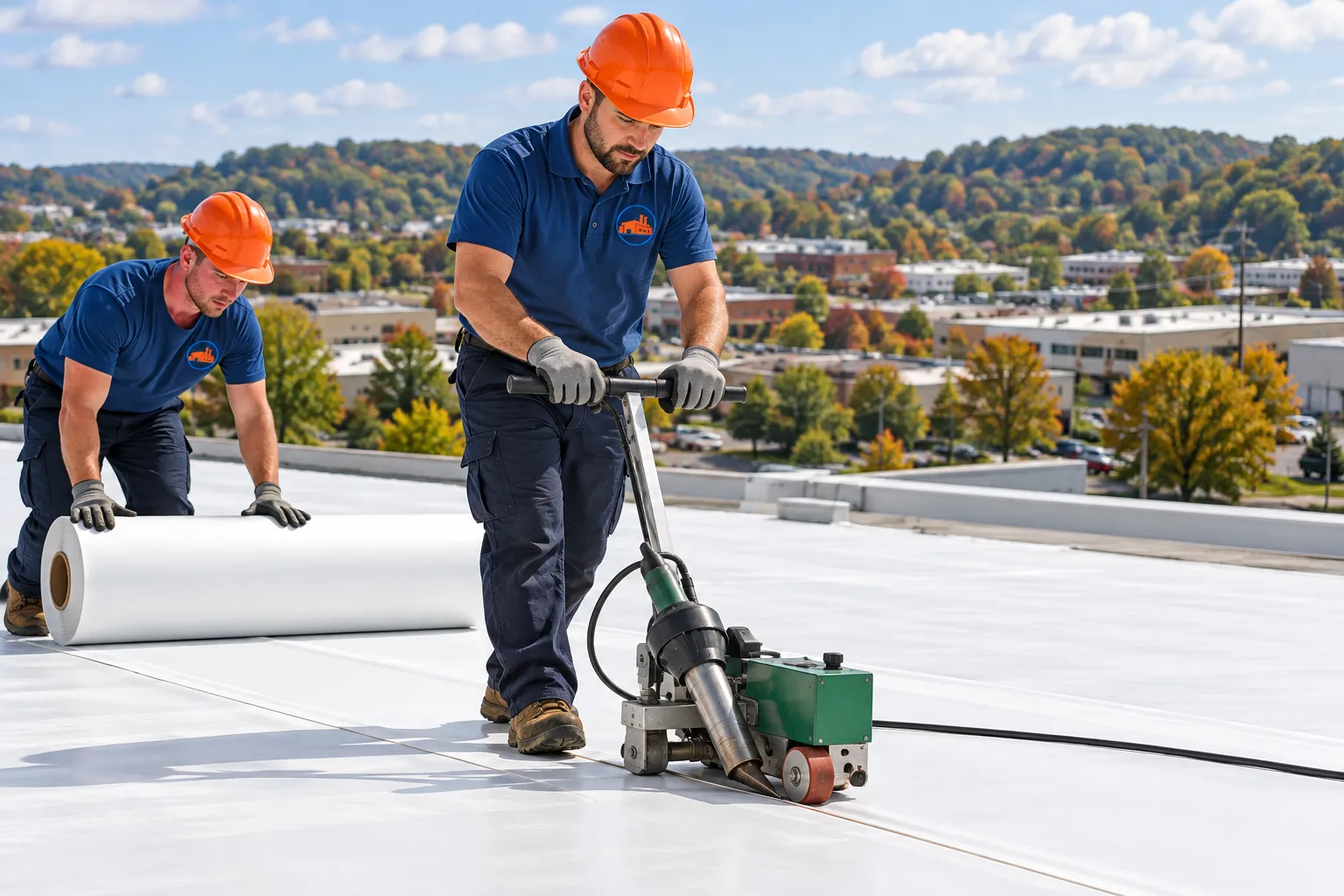
Roofers in logo uniforms laying a white membrane on a medical office roof in Edgewood, KY

Commercial Roofing Problems on Edgewood Clinic Roofs

Roofs over medical and office space wear out around the equipment that keeps the building running.

Leaks Around Crowded Rooftop Units

A clinic roof can hold a dozen curbs, condensate lines, and duct penetrations in a small area. Base flashing at those curbs pulls loose first, and the water shows up as a stained ceiling tile above a hallway or exam room.

Usually Means: Curb flashing rebuilt, often with curbs raised during replacement.

Condensate Draining on the Membrane

Unit drain lines dumping onto the roof leave wear marks and algae near the curb.

Service Traffic Without Pads

Technicians crossing bare membrane to reach units scuff and puncture the sheet.

Aging Seams on Older Rubber

Taped laps on older EPDM open at T-joints where three sheets meet.

Cracked Pipe Boots

Gas and vent pipe boots split with age and let water down the pipe.

Benefits of Replacing Your Roof

Replacing a medical office roof in planned phases fixes the details that keep generating service calls.

Where It Fails

Short Curb Flashing

Thicker insulation from an earlier recover left curbs too short for a proper flashing height.

What The New Work Does

Curbs get raised while units are lifted, so new base flashing runs up and is counterflashed.

Where It Fails

Odor Near Air Intakes

Solvent adhesives used near intakes can pull fumes into patient areas during repairs.

What The New Work Does

Low-odor adhesives and planned intake shutdowns keep fumes out of occupied rooms.

Where It Fails

Worn Paths to Units

Membrane between the hatch and each unit wears through from regular maintenance visits.

What The New Work Does

Welded or adhered walkway pads protect a marked path to every unit.

Where It Fails

Loose Condensate Lines

Lines left to drain on the membrane keep the area around the curb wet.

What The New Work Does

Condensate lines get rerouted to drains so water stays off the roof field.

Commercial Roofing Options for Edgewood

Systems for occupied buildings with many units and careful work hours.

Ceiling Tile Stained Above an Exam Room?

Call and tell us which room and what unit sits above it. Leaks on clinic roofs usually trace back to one curb or pipe boot.

How Edgewood Medical Roofs Get Replaced by Wing

Each phase is planned with the facility manager before any equipment goes up.

  1. Inspect Your Roof

    We walk every curb, pipe, and drain, note intake locations, and take core cuts to check the insulation under the membrane.

  2. Map the Building Wings

    The roof is split into phases that match wings or suites, so each area below knows its work days in advance.

  3. Shut Down Intakes With Staff

    Facility managers schedule unit and intake shutdowns, and the mechanical contractor lifts units that need taller curbs.

  4. Adhere the New Membrane

    Low-odor adhesive bonds TPO or EPDM to cover board, with flashing wrapped up every curb and pipe boots clamped tight.

  5. Add Pads and Restart Units

    Walkway pads go from the hatch to each unit, condensate lines are rerouted, and equipment comes back on.

Serving Erlanger And Five More Towns Near Edgewood

From Edgewood, we take roof repair and replacement jobs in Erlanger and five more Kenton County towns, each permitted through PDS.

Somewhere else in Northern Kentucky? Call us or send us a message.

Erlanger

Distribution roofs where wide TPO sheets cut seam count.

All commercial roofing services

Elsmere

Two-layer storefront roofs that need a full tear-off.

Commercial roofing in Elsmere

Crestview Hills

Tall retail parapets with visible edge metal.

Commercial roofing in Crestview Hills

Lakeside Park

Fellowship halls under low-slope membrane additions.

Commercial roofing in Lakeside Park

Crescent Springs

Retrofit framing that turns flat decks into pitched metal.

Commercial roofing in Crescent Springs

Fort Mitchell

Curb heights and condensate lines checked during replacement.

Commercial roofing in Fort Mitchell
Also ServingVilla Hills

Questions for an Edgewood Commercial Roofing Contractor

What clinic, office, and facility managers ask before roof work starts.

Systems and Odor

What roof systems fit medical and office buildings in Edgewood?

Fully adhered TPO or EPDM fits most of them. Clinics near the St. Elizabeth Edgewood campus carry many rooftop units over occupied patient rooms, so low-odor adhesives and careful work around air intakes matter. Curb heights rise with new insulation, and walkway pads lead from the hatch to every unit.

Can roof adhesive smell get into patient rooms?

Solvent adhesives can, which is why intake locations are mapped first. Low-odor products go on near intakes, and the facility manager schedules unit shutdowns for the hours that section is being bonded. Doors and roof hatches near the work stay closed while adhesive cures.

Why fully adhered instead of mechanically attached on clinic roofs?

Roofs with many penetrations flash more cleanly when the sheet is bonded to cover board, and a bonded sheet resists flutter in wind. Mechanically attached TPO suits big open warehouse fields better than a clinic roof crowded with curbs and pipes.

Do walkway pads matter on a medical office roof?

They do on any roof that technicians visit often. Clinic units get serviced on a schedule, and each trip from the hatch crosses the same strip of membrane. Pads welded or adhered along that path take the boot traffic and dropped tools that would otherwise wear through the sheet near the curbs.

Scheduling the Work

How does a clinic stay open during roof replacement?

Phasing by building wing lets each area close only on its own work days. Noisy tear-off over exam and treatment rooms runs in agreed hours, and every section is sealed watertight before the crew leaves in the evening. Interior protection goes over equipment in any room with an open deck above it.

Who coordinates the rooftop units during the job?

The facility manager and the mechanical contractor join the schedule early. Units that need taller curbs are lifted and reset, gas and electrical connections are restored, and condensate lines are rerouted to drains. Planning and Development Services of Kenton County issues the building permit for the roof.

When should a leaking curb be repaired instead of reroofed?

Repair fits when the core cuts show dry insulation around the curb and the seams elsewhere are holding. New base flashing, counterflashing, and a fresh pipe boot often stop the leak. Wet boards spreading past the curb point toward replacing that section of roof.

Book an Edgewood Commercial Roofing Contractor

Get a free estimate for phased roof work over your clinic or office, planned around intakes and treatment hours.

Call Us · (283) 202-7024