
Industrial Roofing · Erlanger, KY

Erlanger Industrial Roofing Contractor

Protect Plant Roofs From Grease, Exhaust, and Weekly Maintenance Traffic

As an Erlanger industrial roofing contractor, we replace plant and processing roofs carrying heavy units, stacks, piping, and exhaust, in sections planned around production.

Aerial view of roofers working on a large industrial roof with rooftop units
  • Plant floor walked first

  • Membrane matched to exhaust

  • Lifts planned with operations

  • Pads to every unit

How a Plant Roof Differs From an Office Roof

An Erlanger industrial roofing contractor plans around four factors that change the roof design on plants and processing buildings.

FactorOffice or Retail RoofIndustrial Roof
Rooftop equipmentA few HVAC unitsLarge units, fans, stacks, and piping
ExposureSun, rain, and snowPlus grease, solvents, heat, or dust
Foot trafficOccasional serviceDaily or weekly maintenance
Work hours belowDaytimeOften around the clock
Membrane near ventsTPO or EPDMPVC or a protective ring by problem fans

Industrial Roofing Problems on Erlanger Plants

Plant roofs wear out from what lands on them and what stands on them, usually long before weather does the damage.

Roofer in a logo uniform walking a commercial roof to check seams and flashing

Residue Around Exhaust Fans

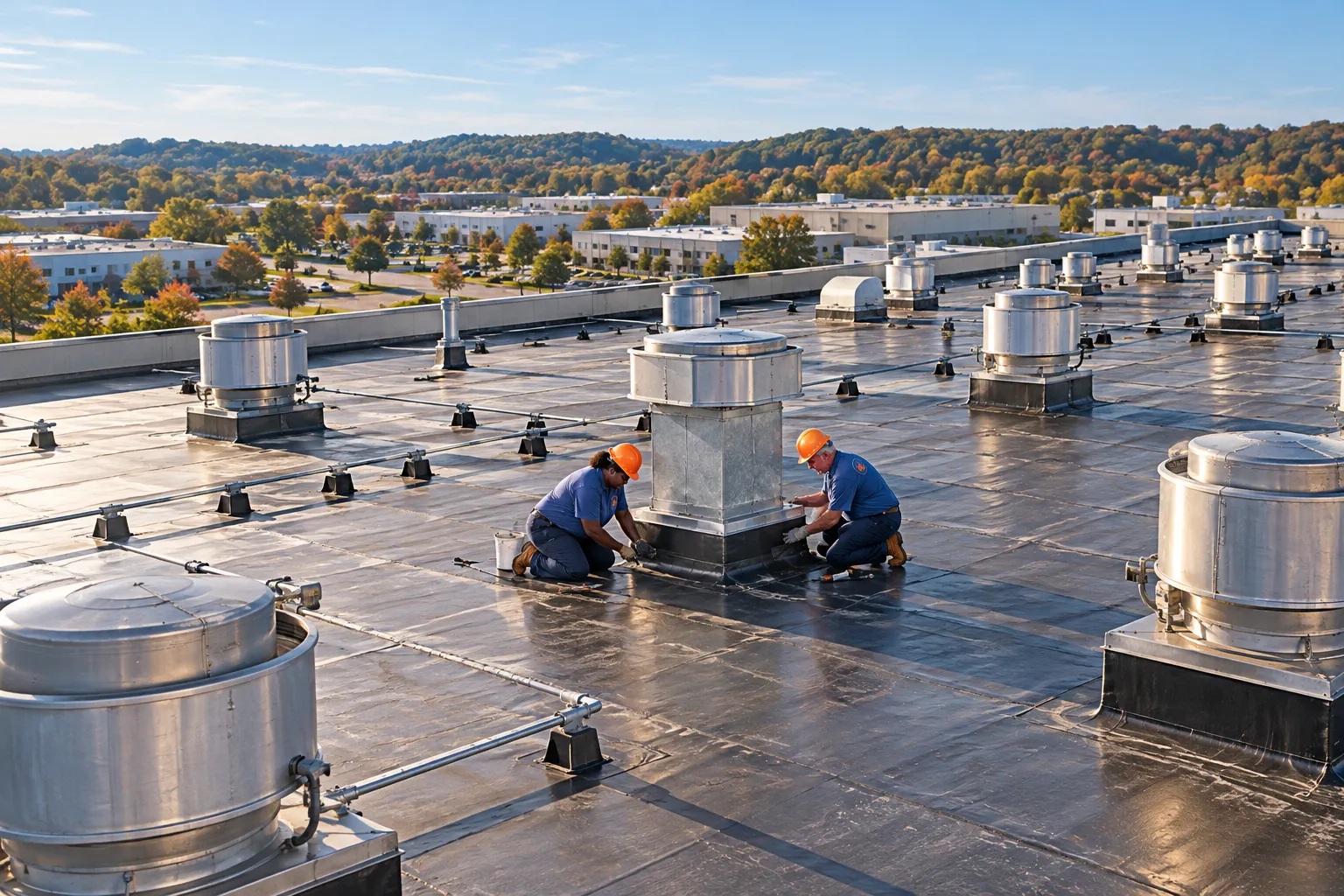
Kitchen exhaust at plant cafeterias, dust collectors, and process vents drop grease, oil, and residue near their curbs. EPDM breaks down under oily residue and TPO only partly resists it, so the sheet softens, swells, and splits in a ring around each problem fan.

Usually Means: A PVC or protective ring around those fans, with grease containment on the fan.
Units on Loose Blocking

Equipment set on wood blocks crushes insulation and tears the membrane as it shifts over time.

Worn Paths From the Hatch

Weekly boot traffic thins the sheet first around service doors, hatches, and unit access panels.

Pipe Stands Cutting In

Gas lines and conduit resting on bare stands punch through the membrane under their own weight.

Dropped Panels and Tools

Toolboxes and unit panels set down on bare insulation leave punctures that leak months later.

Commercial Roofing Options for Erlanger

Industrial roofs often mix materials across one deck, matched to what each area of the roof faces.

PVC Ring Around Problem Fans

Oil-resistant PVC, or a protective layer, goes in a ring around kitchen exhaust and process vents. Grease traps and containment pans on the fans cut down how much residue reaches the sheet.

TPO Across the Open Field

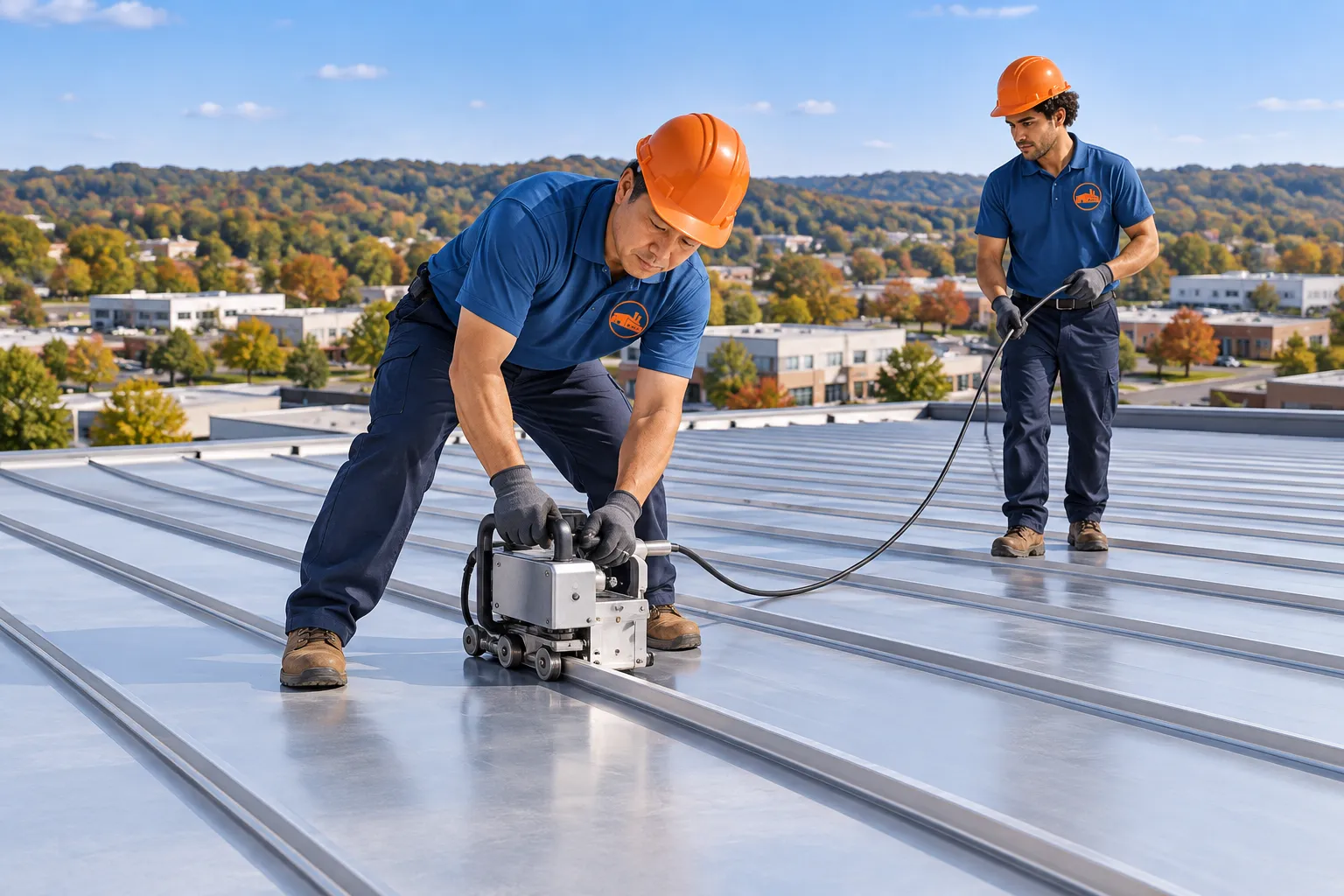
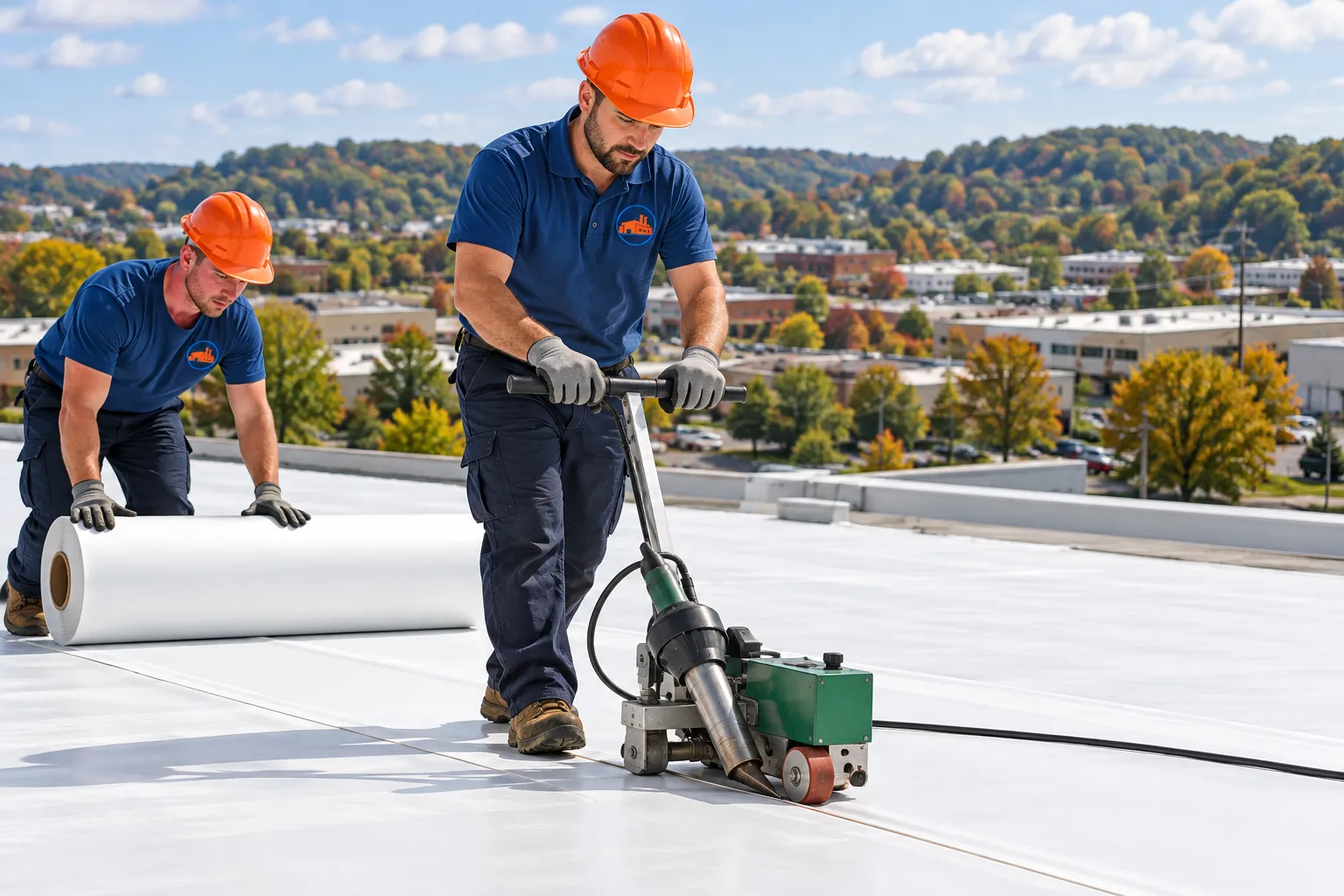
Heat-welded TPO covers the rest of the plant roof where exposure stays modest, with wide sheets to cut the seam count over large steel decks.

Walkway and Traffic Protection

Pads run from the roof hatch to every unit, with thicker membrane or extra cover board around equipment clusters and sacrificial sheets at units opened often.

Curbs and Equipment Rails

Heavy units sit on curbs or steel rails tied into the structure. Every support is flashed into the new membrane, and short curbs get raised during replacement.

Benefits of Replacing Your Roof

Replacement lets an industrial roof be rebuilt around the equipment and exposure it actually carries.

Where It Fails

Membrane Wrong for the Exhaust

Rubber or thin sheet near oily vents softens and splits year after year at the same fans.

What The New Work Does

Oil-resistant membrane goes where residue lands, with TPO kept to the cleaner field.

Where It Fails

Supports That Crush Insulation

Loose blocking and bare pipe stands sink into the boards and cut the sheet underneath.

What The New Work Does

Units move to curbs or rails tied into the structure, and pipe stands sit on protection pads.

Where It Fails

Unprotected Service Routes

Daily maintenance trips wear the membrane through around hatches and the busiest units.

What The New Work Does

Welded or adhered walkway pads mark the path and take the boot traffic off the sheet.

Where It Fails

Curbs Too Short for New Insulation

Added insulation height leaves little room for base flashing on existing equipment curbs.

What The New Work Does

Curbs are raised while units are lifted, with the mechanical contractor on the schedule early.

Production Line Under a Leak?

Call and tell us what runs beneath the wet area and when the line can pause. That sets which roof section opens first and what gets covered inside.

How Industrial Roofing Work Runs in Erlanger

Each section of plant roof opens and closes watertight before the workday ends, mapped against what sits below it.

  1. Inspect Your Roof

    We walk the plant floor to see what vents through the roof, then walk the roof itself: fans, stacks, curbs, rails, pipe stands, walkways, and core cuts across the field.

  2. Map What Sits Below Each Section

    Clean rooms, electrical rooms, and production lines are marked on a roof plan. Tear-off over sensitive areas is set for shutdowns, and daily sections are sized to the crew.

  3. Coordinate Lifts and Shutdowns

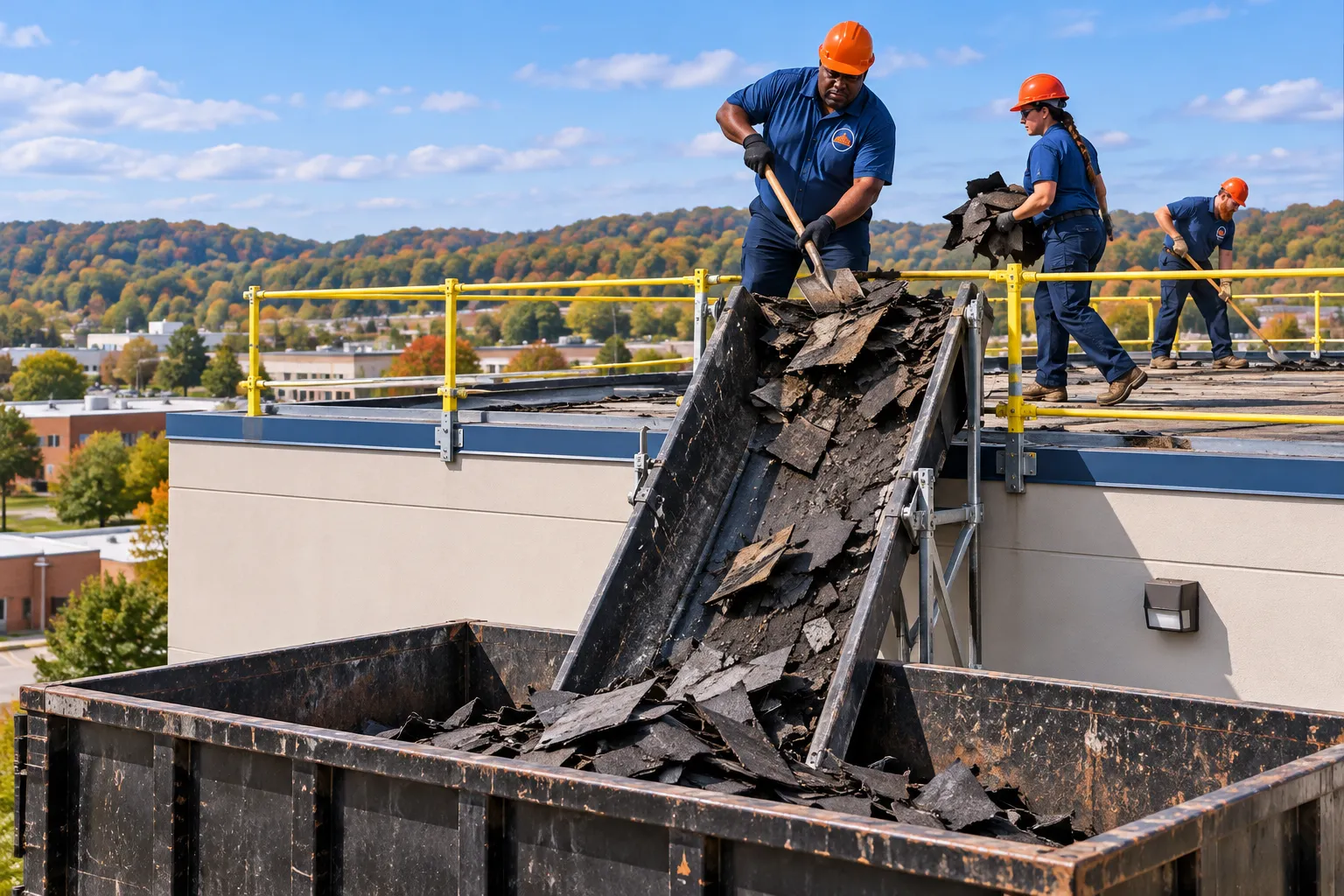
    Crane lifts, unit disconnects, and fan shutdowns are scheduled with plant managers. Debris chutes and dumpsters stay away from forklift lanes and loading docks.

  4. Protect Equipment Inside

    Tear-off dust falls through open flutes on steel decks, so poly sheeting goes over equipment below each open section before the old roof comes off.

  5. Install, Flash, and Seal Each Day

    New boards, membrane, and flashing go on section by section. A temporary night tie-in seals each edge to the old roof until the next section opens.

Other Roof Work for Erlanger Plants

Plants often have more than one kind of roof on site, from office wings to metal outbuildings.

Questions for an Erlanger Industrial Roofing Contractor

Answers on exposure, equipment, foot traffic, and keeping a plant running during roof work.

Exposure and Equipment

What makes industrial roofing for plants in Erlanger KY different?

Heavier equipment, more penetrations, and harsher exposure. Plants carry exhaust stacks, process piping, heavy rooftop units, and regular maintenance traffic, and many run around the clock. Those factors shape membrane choice, walkway layout, and phasing, so planning starts with a walk of the plant floor to see what vents out through the roof.

Which roof membrane holds up to grease and chemical exhaust?

PVC and other oil-resistant membranes hold up where grease, oils, or chemicals land, while EPDM breaks down under oily residue. TPO sits in between and works on most plant roofs with modest exposure. Many plants split the roof, using PVC around problem fans and TPO across the rest of the field.

How are rooftop unit supports handled on industrial roofs?

Heavy units sit on curbs or steel rails tied into the building structure, and every support gets flashed into the new membrane. Curbs are wrapped and counterflashed, rails get flashed post bases with sealed caps, and pipe stands rest on protection pads. Pitch pans are kept for odd shapes only.

Working Around Production

Can you replace an industrial roof while the plant runs?

Yes, most industrial roofs are replaced in sections while production continues. Each section opens and closes watertight before the shift ends, with a temporary night tie-in at its edge. Tear-off over clean rooms or electrical rooms is scheduled for shutdowns, and poly sheeting protects equipment from dust falling through steel deck flutes.

Do walkway pads for industrial roofs really help?

They do, because plant roofs collect far more boot traffic than office roofs. Pads welded or adhered from the hatch to every unit keep staff on a protected path, and thicker membrane or cover board around equipment clusters adds strength. Skylight screens or guardrails keep workers off fiberglass panels.

Who coordinates crane lifts and unit disconnects?

Lifts and shutdowns are planned with the plant manager and the mechanical contractor before tear-off starts. Units that need lifting so curbs can be raised are booked early, and crane positions are kept clear of forklift lanes and loading docks.

Plan With an Erlanger Industrial Roofing Contractor

Get a free estimate that starts with a plant floor walk and a section plan built around your production schedule.

Call Us · (283) 202-7024