EPDM Roofing · Erlanger, KY

Erlanger EPDM Roofing Contractor

Extend Roof Life With Rubber That Flexes Through Freeze and Thaw

Hire an Erlanger EPDM roofing contractor for rubber membrane on schools, churches, offices, and medical buildings, laid over dry insulation with primed, taped seams.

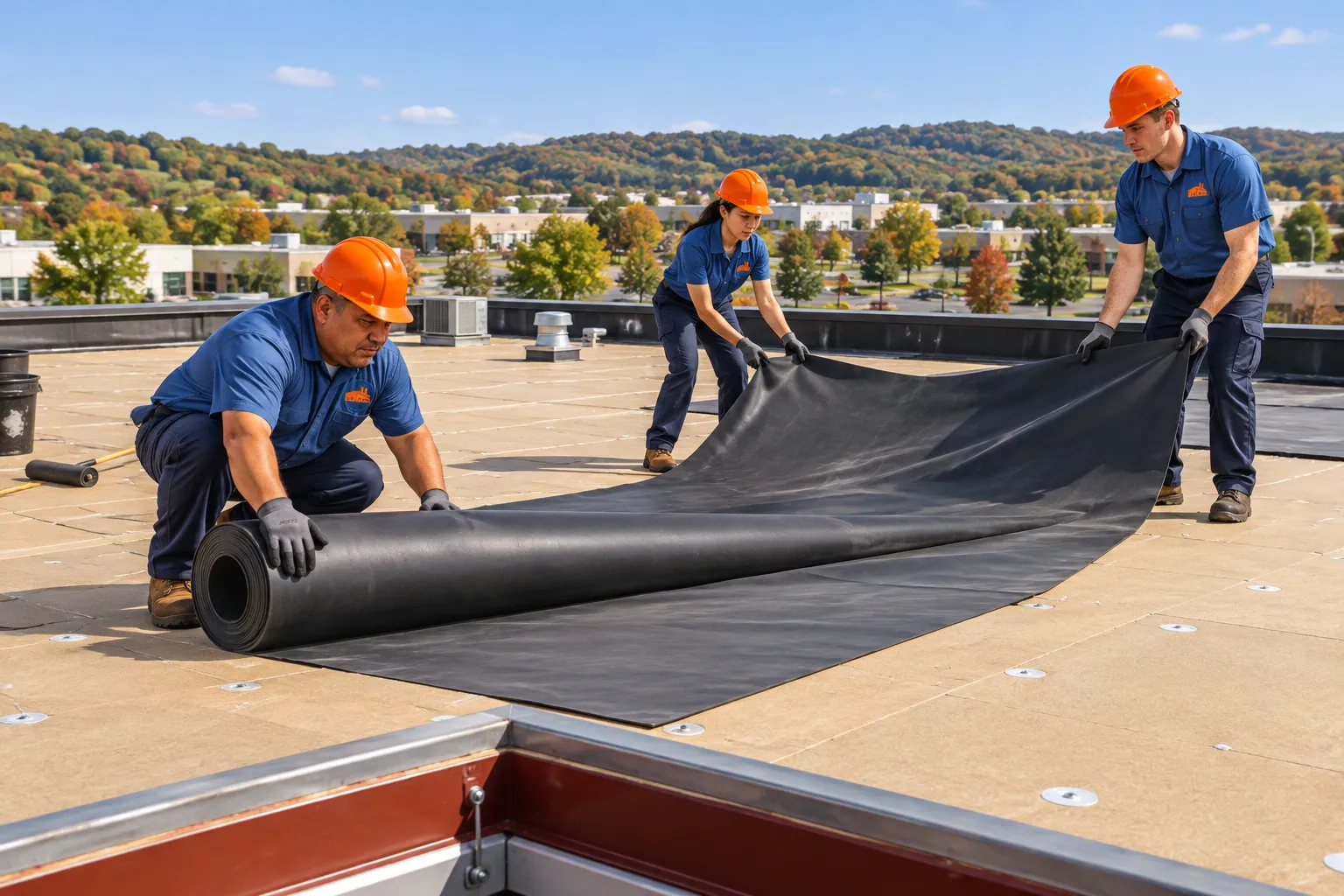
Roofers in logo uniforms rolling a black EPDM membrane seam on a commercial roof
  • Primed and taped laps

  • Flexible below freezing

  • Wet boards replaced first

  • T-joints patched

Does Your Building Suit a Rubber Membrane?

An Erlanger EPDM roofing contractor checks these roof conditions first, because rubber fits some buildings far better than others.

Roof ConditionFits EPDMPoints Elsewhere
Roof shapeSimple rectangles with few lapsMany levels and odd cutouts
Exhaust on the roofFew or no kitchen fansGrease or oily plant vents
Foot trafficModest service visitsDaily maintenance paths
Building heatHeated storage, schools, officesHard-cooled retail in summer
InsulationDry boards in core cutsSoaked boards left in place

EPDM Roofing Problems Around Erlanger

Rubber roofs on Kenton County schools and offices tend to leak at laps, edges, and drains well before the sheet itself wears out.

Roofer in a logo uniform walking a commercial roof to check seams and flashing

Seams Opened by Age

Older EPDM laps were often glued rather than taped, and the bond weakens as the adhesive dries. Poor rolling on the original install leaves edges that peel back a little more each winter until water slips under the lap.

Usually Means: Cleaning, priming, and new seam tape on the lap, or a new sheet if many laps are open.
Ice Behind Gravel Stops

Perimeter edge metal traps ice that pushes water back under the membrane at the roof edge.

Frozen Drain Bowls

A drain freezing over sends meltwater back toward the clamping ring and under the sheet.

Wall Flashing Pulled Tight

Cold shrinks rubber, so base flashing at walls bridges the corner and tears at its top edge.

Swelling Near Kitchen Fans

Oily exhaust softens rubber around fans, leaving spongy, stretched patches that split under foot.

Commercial Roofing Options for Erlanger

Rubber roofs come in a few forms. Building heat, deck type, and the look you want steer the choice.

Fully Adhered Black EPDM

Adhesive bonds the sheet straight to cover board for a smooth surface with no fasteners showing. Heated storage and schools with steady winter heat often use black rubber.

White-on-Black EPDM

A white top layer on the membrane reflects more summer sun over cooled offices and clinics. It shows dirt more than black sheet and melts snow a little slower.

Reinforced, Mechanically Attached

Reinforced 45 or 60 mil sheet is fastened at the laps on steel decks. It goes down in cooler weather more easily than a fully glued roof.

Benefits of Replacing Your Roof

Replacing a tired rubber roof resets the seams, edges, and boards that patches leave behind.

Where It Fails

Glued Laps Letting Go

Contact-cement seams from decades ago peel back once the glue dries and the edges catch wind.

What The New Work Does

Primed laps with factory seam tape get rolled hard and checked edge by edge before the area is left.

Where It Fails

Soaked Polyiso Underneath

Wet boards lose insulating value and can rot a wood deck or rust a steel one from above.

What The New Work Does

Soaked boards come out to the deck and new polyiso goes in staggered layers under a firm cover board.

Where It Fails

Water Sitting at Drains

Standing water at a bowl freezes, thaws, and works at the clamping ring every winter.

What The New Work Does

Tapered boards near each drain pitch water to the bowl so it leaves before the next freeze.

Where It Fails

Cracking in Hard Freezes

Brittle built-up surfaces split when the deck and insulation move in cold snaps.

What The New Work Does

Rubber stays flexible well below freezing, so the sheet stretches with the roof instead of cracking.

Stain Showing After Snow Melts?

Call and mention where snow piles up on the roof and how close the stain sits to an outside wall or a drain. Melt leaks usually trace to edges and bowls.

How EPDM Roofing Is Installed in Erlanger

Rubber bonds with primer and tape, so clean laps and firm rolling decide how the seams hold.

  1. Inspect Your Roof

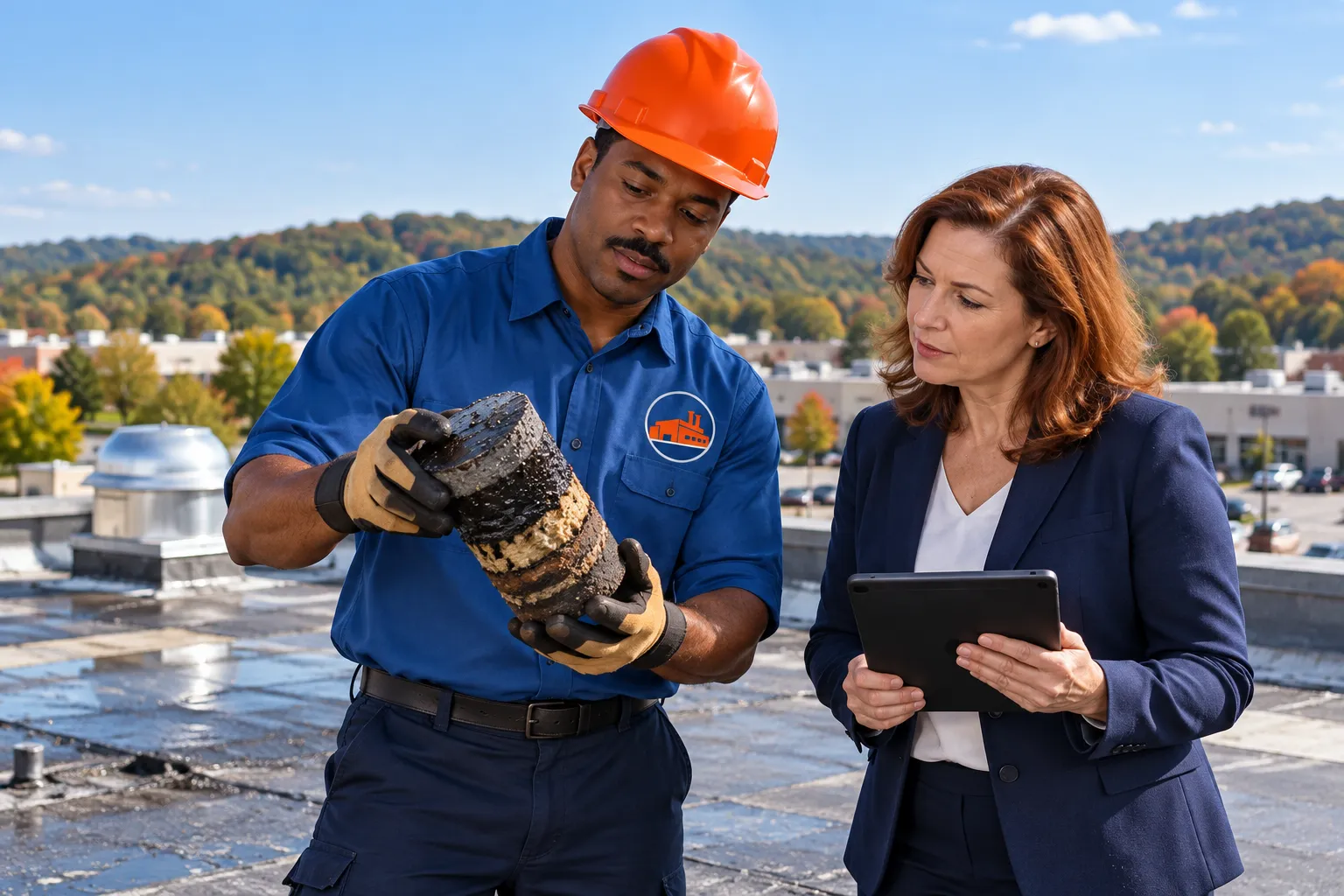
    Core cuts or an infrared scan find wet insulation before any rubber is ordered. We also check edges, drains, and wall flashing, and look at the deck from inside.

  2. Remove Wet Boards to the Deck

    Soaked polyiso is cut out down to the deck. Any soft wood or rusted steel found under it is repaired while the area is open and dry.

  3. Build the Insulation and Cover Board

    New polyiso goes down in staggered layers, with tapered boards near drains. A high-density cover board on top protects against hail and foot traffic.

  4. Lay and Seam the Rubber

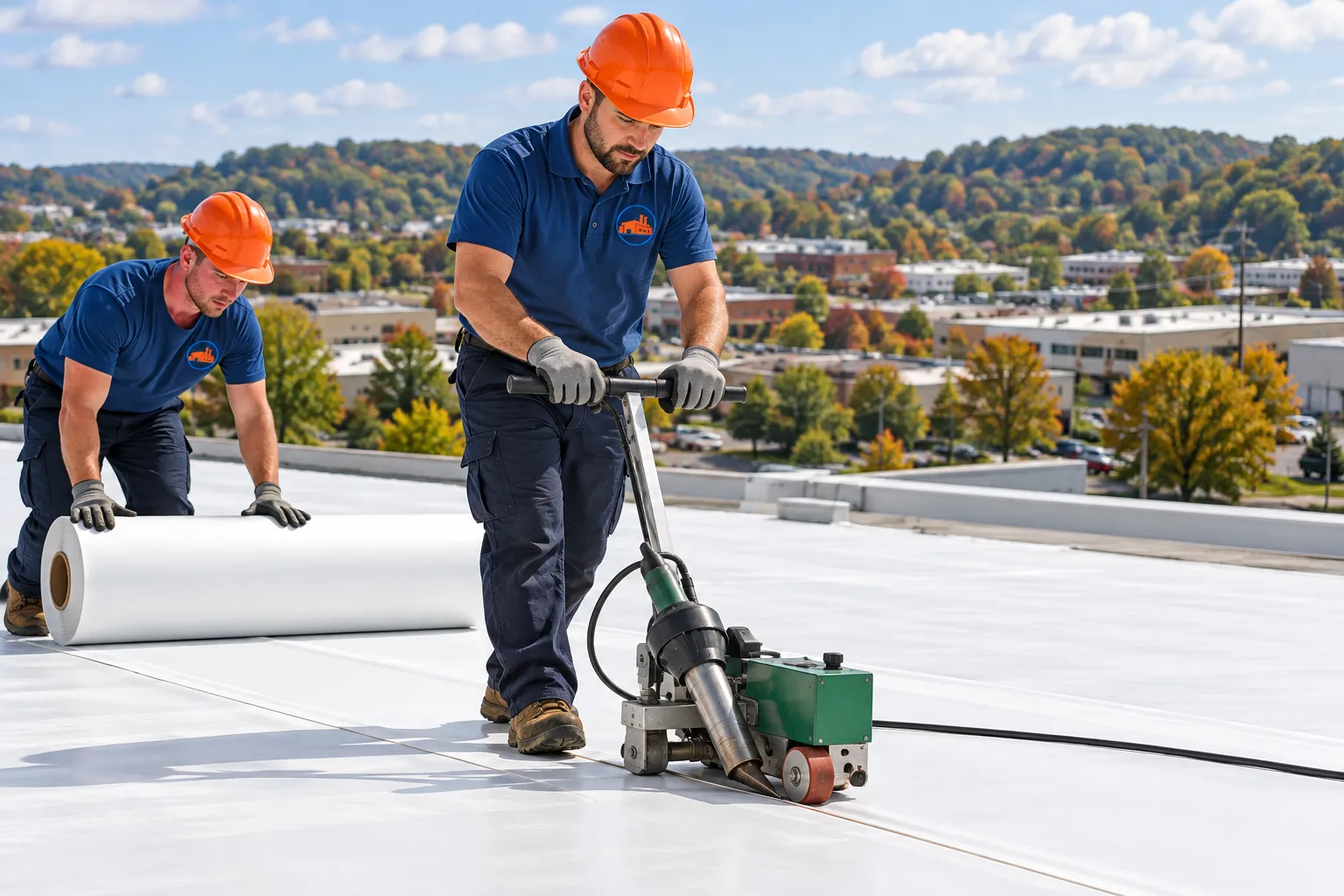
    Sheets overlap by the width the maker specifies. Both lap surfaces are scrubbed with primer, seam tape is set, and the seam is rolled firmly with a silicone roller.

  5. Patch T-Joints and Flash Edges

    Cured patches cover every spot where three sheets meet. Walls, curbs, and edge metal get flashed, and each seam edge is checked before the crew leaves that area.

Related Work on Erlanger Low-Slope Roofs

Rubber is one answer for a low-slope roof. These pages cover the cases where another approach fits.

Answers From an Erlanger EPDM Roofing Contractor

What owners ask about rubber roofs, seams, color, winter, and the boards underneath.

Rubber Basics

Where does EPDM roofing for schools and offices in Erlanger fit best?

EPDM covers many offices, schools, churches, medical buildings, and older warehouses across Kenton County. Owners pick it for cold-weather flexibility, large sheets with few seams on simple roofs, and easy patching years later with compatible tape and primer. It suits roofs with modest foot traffic and few kitchen exhaust fans.

Black vs white EPDM roof in Kentucky: which color should go on?

Black EPDM is the traditional sheet and costs less to make, while white or white-on-black reflects more sunlight. Kenton County has cold winters and hot summers, so the building decides. Offices and clinics running air conditioning hard lean white; heated warehouses with little cooling lean black, which also melts snow faster in sun.

What thickness of EPDM goes on a commercial roof?

Commercial EPDM comes in 45 and 60 mil sheets. Reinforced versions are made for mechanically attached roofs, where fasteners at the laps hold the sheet to a steel deck. Thicker rubber gives more material to patch into later around curbs and drains.

Seams and Winter

How are EPDM roof seams made?

Sheets overlap by the maker's width, both laps are scrubbed with primer, and factory seam tape is pressed in before the seam is rolled firmly. T-joints, where three sheets meet, get a cured patch. Seam strength depends on clean laps and careful rolling, so each edge is checked before the crew moves on.

How does an EPDM roof handle freeze-thaw in Northern Kentucky?

Well, because the rubber stays flexible well under freezing and stretches as the deck and insulation move. Seam edges, edge metal where ice dams form, drain bowls, and wall flashing still need attention in winter. Crews keep primer and adhesive warm on cool days and close seams before late-afternoon cold.

What happens to insulation and cover board under EPDM?

Existing boards are checked for moisture first, since wet polyiso loses its insulating value. Soaked boards come out to the deck, new polyiso is fastened or adhered in staggered layers, and a high-density cover board goes on top. Fully adhered rubber then bonds straight to that cover board.

Work With an Erlanger EPDM Roofing Contractor

Get a free estimate for a new rubber roof, with core cuts first so the boards underneath are known before any sheet is ordered.

Call Us · (283) 202-7024