
TPO Roofing · Erlanger, KY

Erlanger TPO Roofing Contractor

Re-Cover a Dry Low-Slope Roof Instead of Tearing Off to the Deck

As an Erlanger TPO roofing contractor, we install heat-welded white membrane on warehouses, offices, and retail buildings, over a dry recover or a fresh deck.

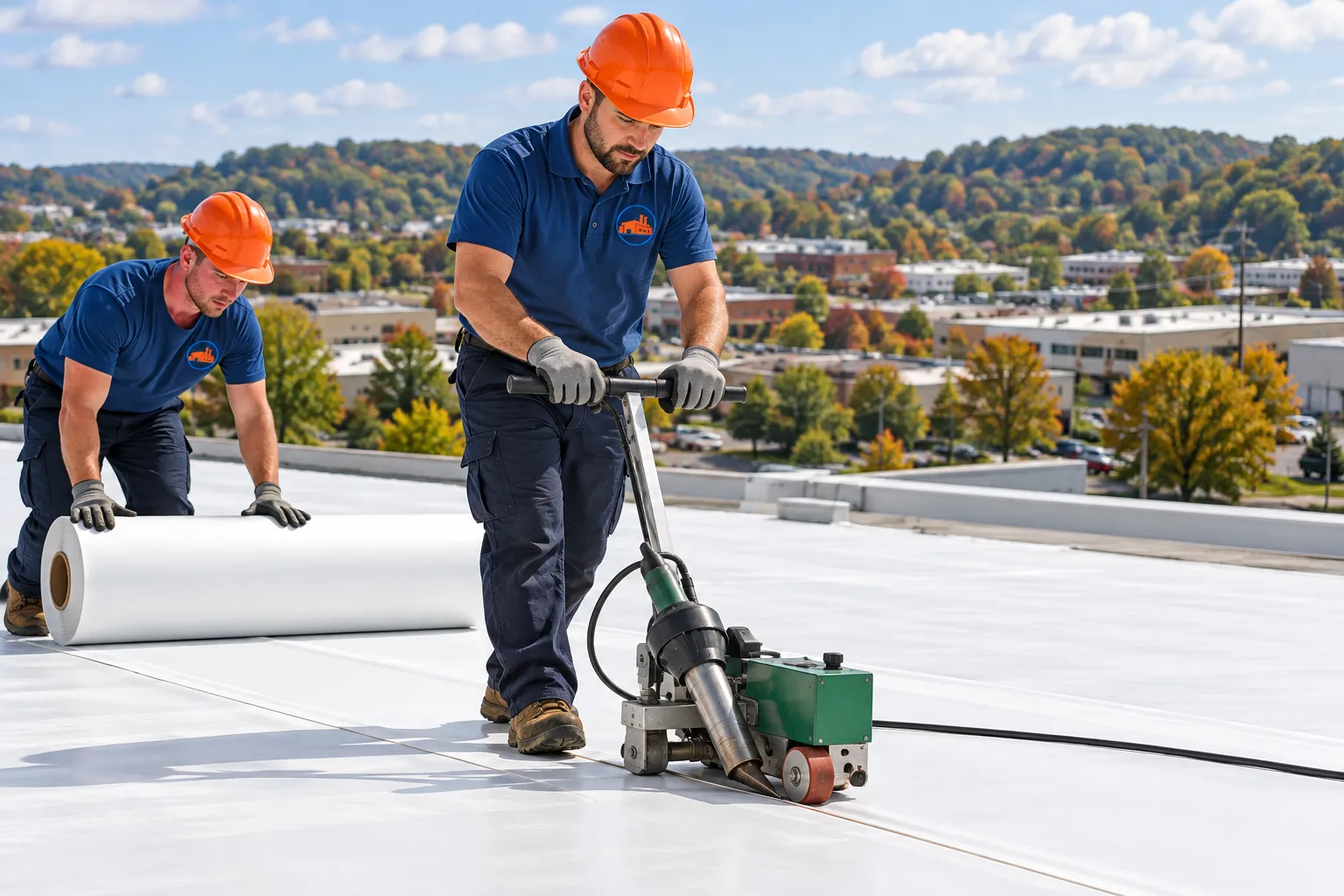
Roofers in logo uniforms laying white TPO membrane on a low-slope commercial roof
  • Hot-air welded seams

  • Plates over steel decks

  • White reflective surface

  • Every lap probed

Is Your Low-Slope Roof Ready for TPO?

Before an Erlanger TPO roofing contractor quotes a new sheet, these roof conditions sort a TPO job from one that needs another system first.

Roof ConditionFits TPOPoints Elsewhere
Deck slopeFlat or low slope with drainsSteep pitch that sheds water
Existing roofOne dry layer over a solid deckTwo layers already on
InsulationDry boards in core cutsSoaked polyiso across the field
Exhaust on the roofOrdinary HVAC unitsKitchen fans venting grease
Roof sizeLarge open warehouse fieldsTiny roofs crowded with pipes
Foot trafficService paths with walkway padsHeavy daily traffic over bare sheet

TPO Roofing Problems on Erlanger Buildings

Older white membranes show their age at laps, curbs, and fasteners long before the open field wears through.

Roofer in a logo uniform walking a commercial roof to check seams and flashing

Cold Welds Along the Laps

A lap welded on a cold morning, or with dust left in it, looks closed but has gaps a blunt probe can catch. Water finds those gaps, runs along the lap, and drops through at a fastener row or a deck joint far from the stain inside.

Usually Means: The lap gets cleaned, rewelded, and probed again along its full length.
Curb Wraps Pulling Loose

Membrane shrinks away from HVAC curb corners and leaves the counterflashing open to wind-driven rain.

Plates Showing Through

Fastener plates pressing up under the sheet mark spots where insulation crushed under foot traffic.

Cracked Pipe Boots

Prefabricated boots split at the clamp after years of heat, letting water down the pipe.

Dirty Rings Around Drains

Grit circles at the bowl show where water sits too long because slope never reached the drain.

Commercial Roofing Options for Erlanger

TPO is held down four ways. Deck type, wind exposure, and what the building does underneath decide which one goes on.

Mechanically Attached

Screws and plates in each lap hold the sheet to a steel deck. Large warehouses near the airport usually take this method because it goes down quickly over wide open fields.

Fully Adhered

Bonding adhesive glues the membrane to a cover board across the whole surface. Roofs crowded with curbs and pipes, or where sheet flutter is a concern, often get adhered TPO.

Induction Welded

Plates sit under the sheet and bond to it by induction heat, so the membrane stays continuous above them. Owners wanting fewer laps and hidden fastening pick this option.

Ballasted

A loose sheet is held down with river stone. Strong decks that can carry the extra weight are the only candidates, and the structure gets checked before stone goes up.

Benefits of Replacing Your Roof

A new TPO roof fixes the weak points that patches on an aging sheet keep chasing.

Where It Fails

Open Laps

Taped or glued seams on an older roof let go across many laps once the adhesive dries out.

What The New Work Does

Hot-air welds fuse the sheets into one band, so a good seam holds as well as the membrane itself.

Where It Fails

Dark Hot Surfaces

Black gravel or aged membrane soaks up summer sun over offices and cooled retail space.

What The New Work Does

White TPO reflects sunlight and keeps the membrane surface cooler through July and August.

Where It Fails

Handmade Flashing

Field-built corners and boots at curbs crack first and are where most low-slope leaks begin.

What The New Work Does

Factory corners, pipe boots, and curb wraps weld to the field sheet for consistent details.

Where It Fails

Worn Service Paths

Maintenance staff walking to rooftop units wear a thin sheet through near hatches.

What The New Work Does

Thicker 60 or 80 mil sheet and welded walkway pads take the boot traffic around units.

Seam Lifting Near a Rooftop Unit?

Tell us which unit sits closest to the leak and whether the stain grows after wind or after steady rain. That helps pin it to a lap or a curb wrap.

How TPO Roofing Goes On in Erlanger

Every lap is welded and tested the same way, from the first test strip of the morning to the last probe.

  1. Inspect Your Roof

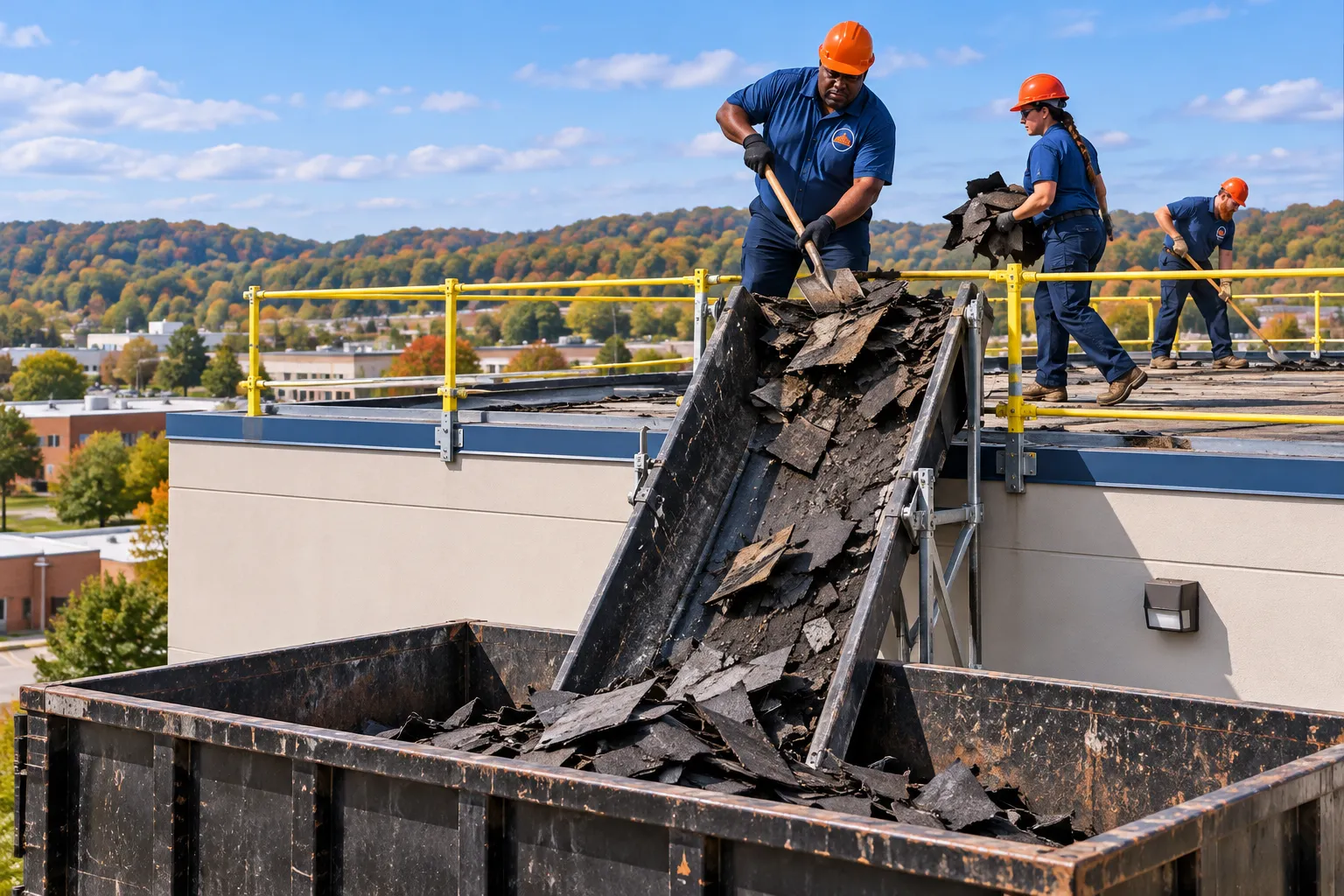
    We cut cores to count layers and check the insulation for water, then walk every curb, drain, and edge. That tells us whether the sheet can recover one dry roof or needs a tear-off.

  2. Set Boards and Cover Board

    Wet polyiso comes out, tapered boards go in near drains, and a cover board tops the insulation. Fasteners or adhesive follow the attachment method chosen for the deck.

  3. Weld Test Strips First

    Crews run test welds at the start of each day and after breaks, then pull them apart. The membrane must tear before the weld does, or the welder settings change.

  4. Lay the Field and Flash Details

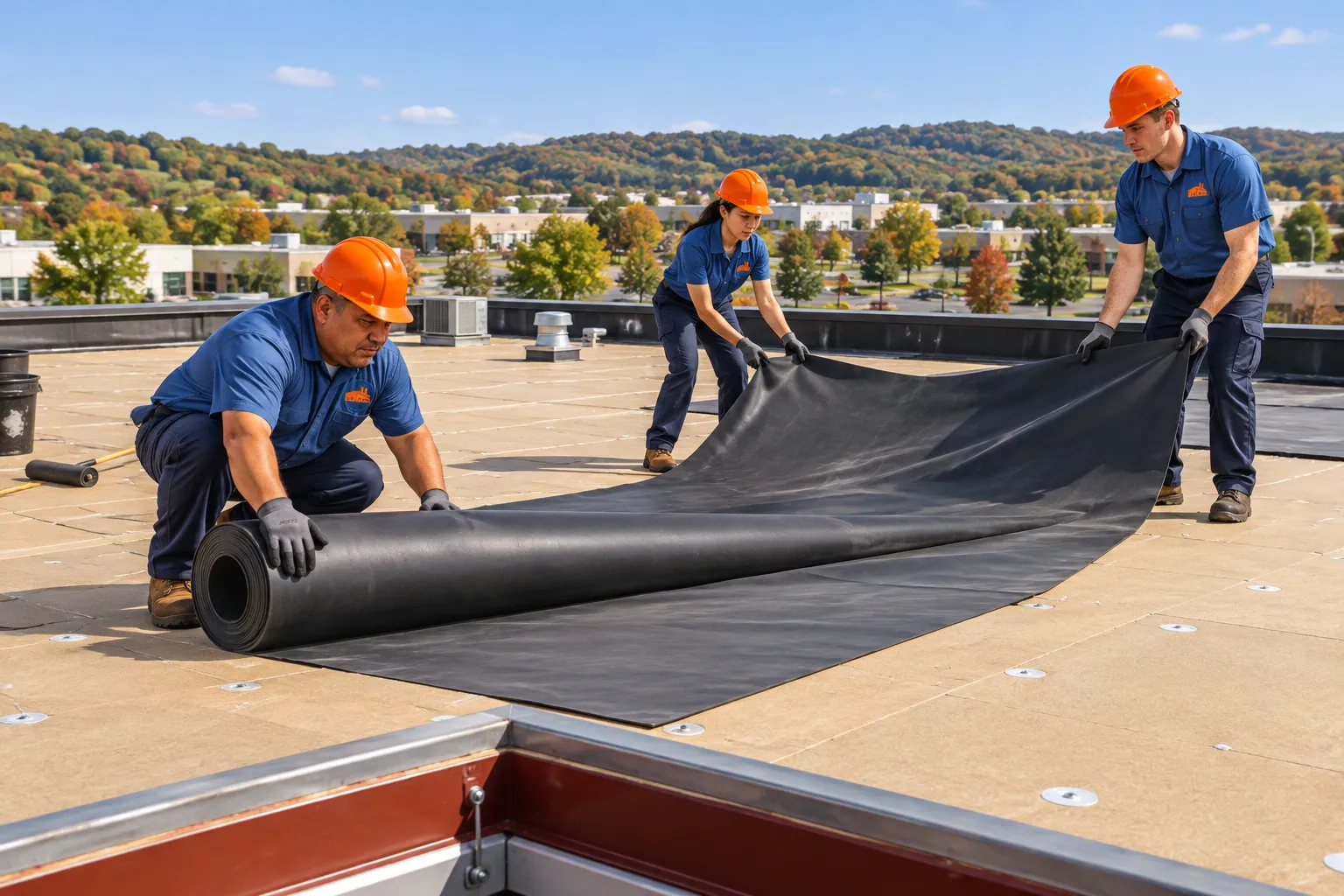
    Wide sheets cut the seam count across big decks. Curbs, pipes, parapets, and drains get factory corners, boots, and welded flashing tied to the field sheet.

  5. Probe Every Seam

    A blunt pick runs along each finished lap to catch cold spots or gaps. Drains are cleared, edge metal is checked, and photos of the details go to you.

Other Roof Work That Pairs With TPO

Some buildings need a different sheet or a drainage rebuild before a white membrane makes sense.

Questions for an Erlanger TPO Roofing Contractor

Answers on how TPO is made, joined, attached, and flashed on Kenton County roofs.

The Membrane

Is TPO roofing for warehouses in Erlanger KY a common choice?

Yes. TPO is widely used on low-slope warehouses, offices, retail centers, and light-industrial buildings around Erlanger. It comes in wide rolls, so big decks carry fewer seams, and its white surface stays cooler in summer. Common thicknesses are 45, 60, and 80 mil, with thicker sheet helping where staff walk to rooftop units often.

How does a TPO vs EPDM vs PVC commercial roof compare?

All three are single-ply membranes, and they differ in color, seams, and grease resistance. TPO is white with hot-air welded seams and fair grease resistance. EPDM is usually black, with taped or glued laps, and handles cold very well but breaks down under oil. PVC is welded like TPO and holds up best near kitchen and plant exhaust.

Which TPO thickness should a busy roof get?

Thicker sheet suits roofs with regular foot traffic. On a 60 or 80 mil membrane, more material sits over the reinforcing scrim, so service visits to HVAC units and dropped panels do less damage. Walkway pads from the hatch to each unit add another layer where boots land most.

Seams and Attachment

How are TPO roof seams welded and checked?

A robotic or hand-held hot-air welder melts the upper and lower sheets together along each lap. Crews wipe the lap clean, run test welds daily and after breaks, and pull the strips apart to confirm the sheet tears first. Finished seams are probed with a blunt pick, and cold mornings, sun, and wind all change the heat needed.

Mechanically attached vs fully adhered TPO: which goes on my building?

It depends on the deck, wind exposure, and what happens underneath. Mechanically attached TPO, with screws and plates in the laps, is the usual pick for steel decks on large Erlanger-area warehouses. Fully adhered sheet bonds to cover board and fits roofs with many penetrations. Induction welded and ballasted systems cover the remaining cases.

How is TPO flashed around rooftop units and parapets?

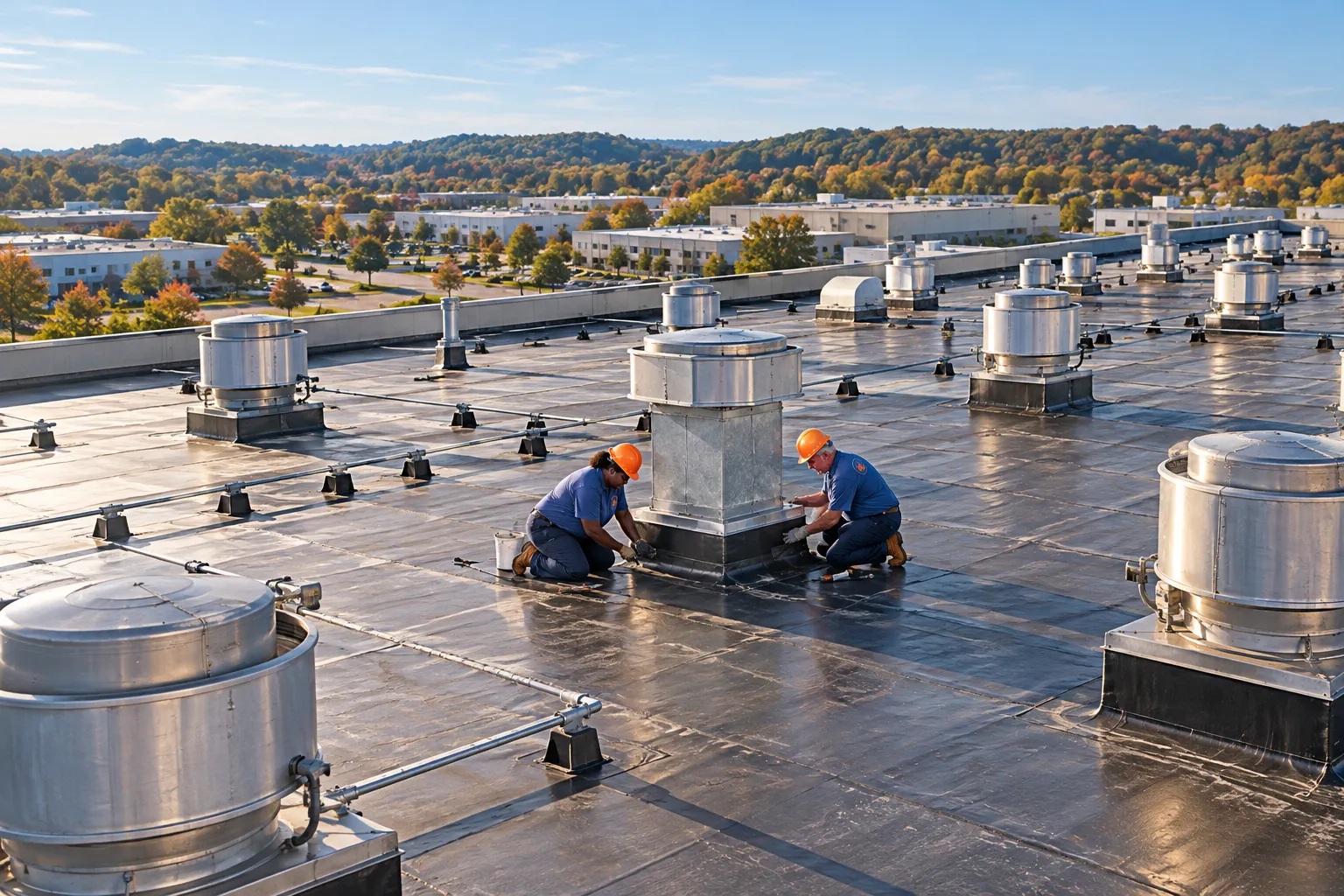
Every curb, pipe, and wall gets TPO membrane welded to the field sheet, so the waterproofing runs as one piece. Curbs are wrapped and counterflashed, pipes take prefabricated boots with stainless clamps, parapets are wrapped and capped with coping, and drains are clamped into the membrane. Pitch pans are used only where nothing else fits.

Talk to an Erlanger TPO Roofing Contractor

Send us the roof size and what sits on it, and get a free estimate for a TPO recover or tear-off.

Call Us · (283) 202-7024